Oregon’s History of Racial Discrimination and the Redlining of Albina
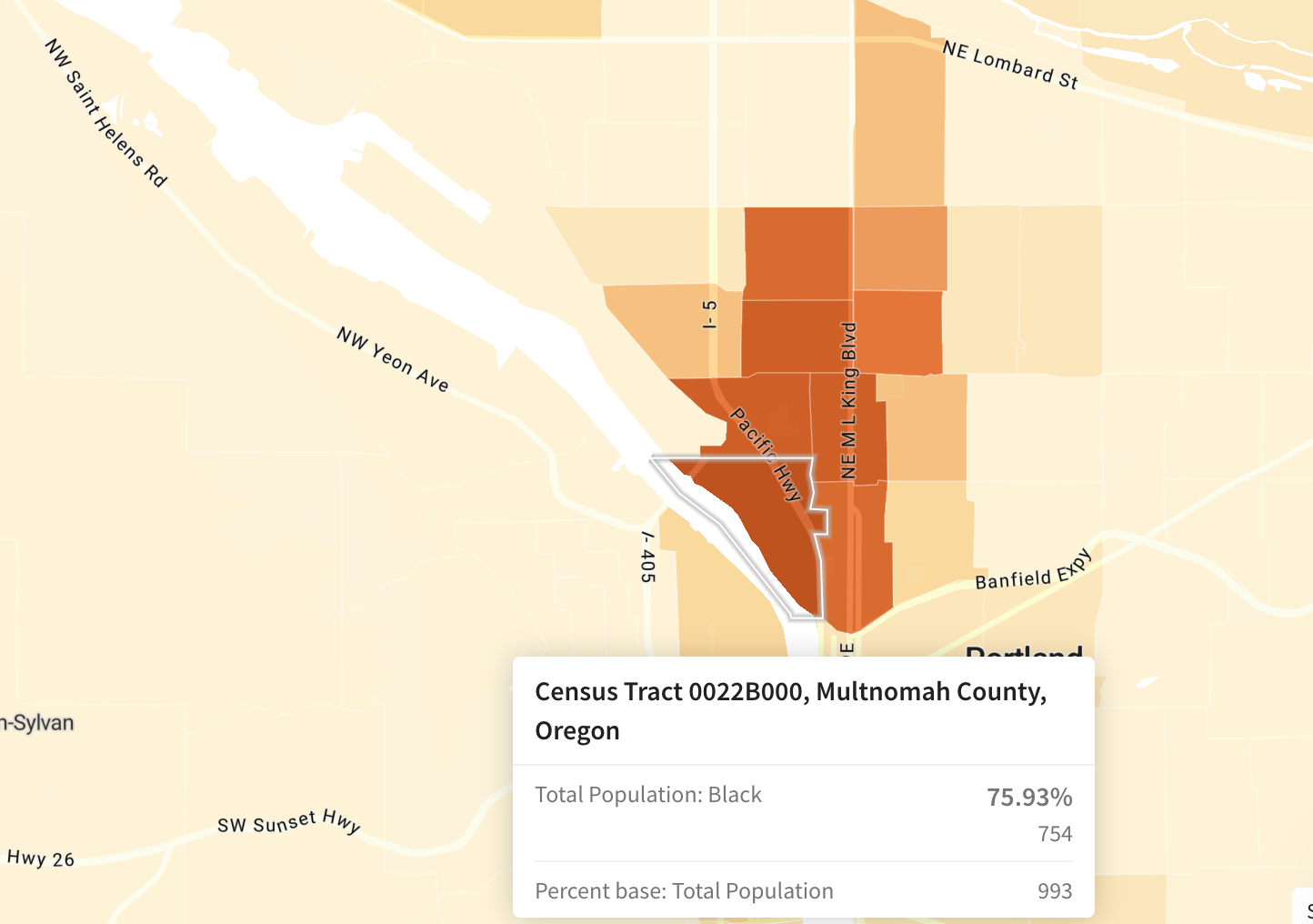
1960 census data of Multnomah County, which encompasses Portland, highlighting the high Black population within the Albina neighborhood due to racial discrimination and redlining. Social Explorer.
Portland, Oregon, is the largest city on the West Coast with the smallest Black population, giving the city the commonly used nickname of “the whitest city in America.”
This website illuminates the history of racial exclusion in the state of Oregon by situating the redlining of the Albina neighborhood and housing discrimination targeting the Black community, which began in the 1930s, as echoes of the exclusionary territory laws of the 1840s and the first state constitution passed in 1857. These echoes can be heard in the rhetoric used to address the concepts of land and property within archival materials.
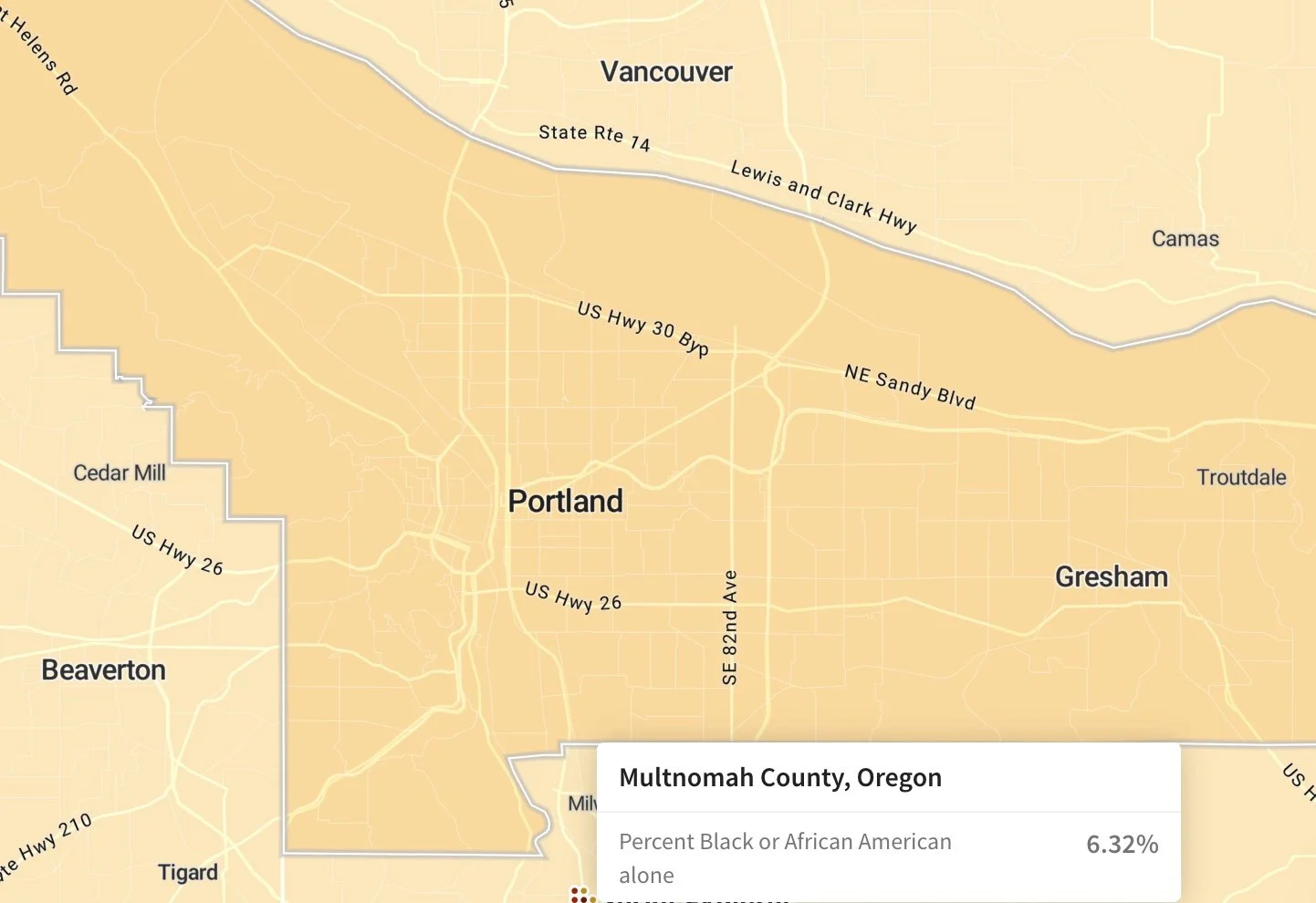
2025 census data map, highlighting the massive decrease in African American population in Albina around 60 years later. Social Explorer.
This research highlights the role of memory and place within the narrative of housing and property, as African Americans have historically been displaced from the Albina neighborhood through exclusion, redlining, and urban renewal. Hearing the echoes of this history, the Black community, nonprofits, and organizations rooted in Albina are working to educate, rebuild, and protect the future of this neighborhood.